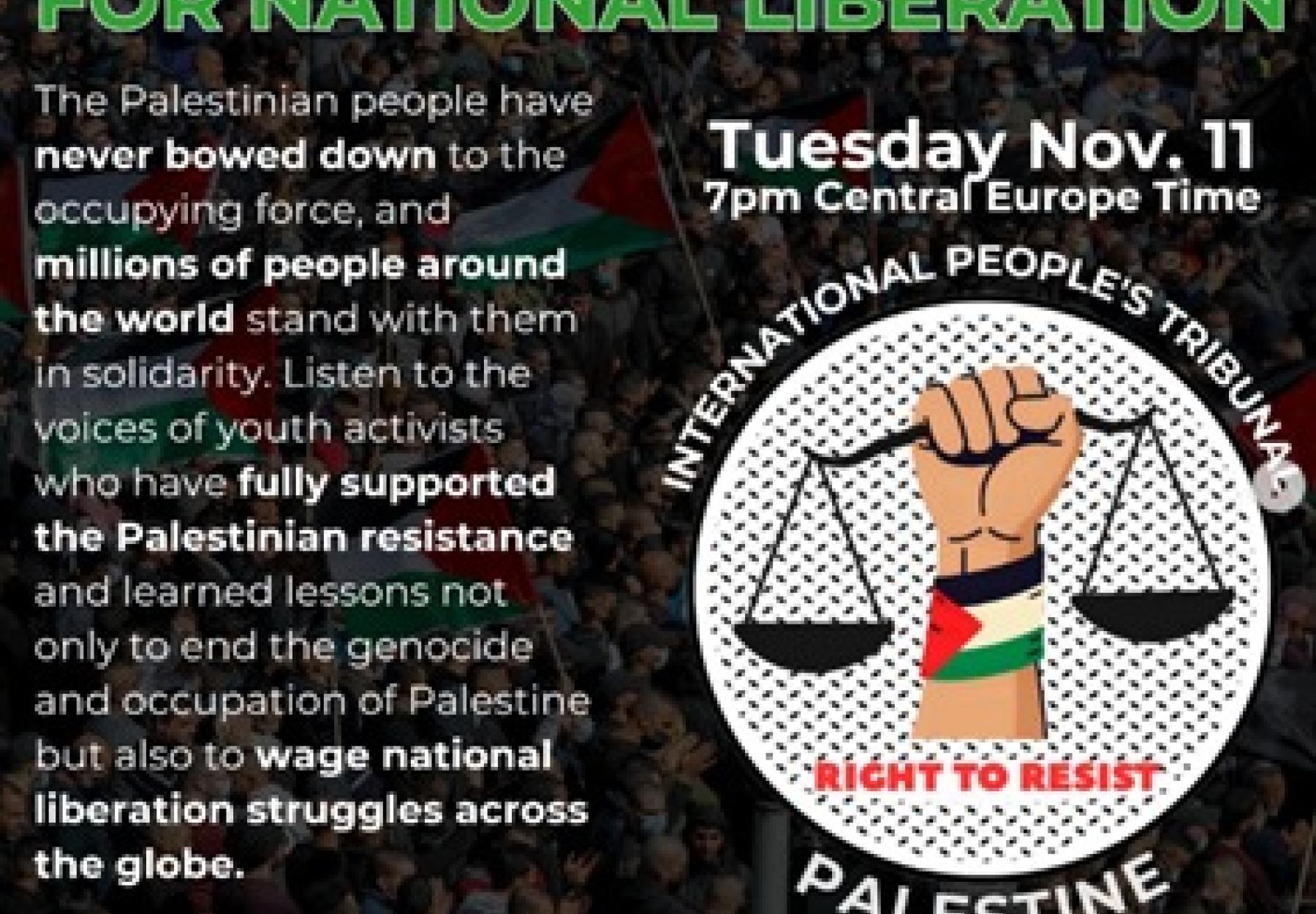
In the lead-up to the International People’s Tribunal on Palestine, APN participated in a series of preparatory seminars that explored the legal, human rights, and environmental implications of Israeli and imperial-backed crimes in Palestine. The seminars aimed to broaden international understanding of the political realities that necessitate the tribunal at this critical juncture. APN Chairperson Razan Zuayter delivered the keynote address at the closing seminar.
Understanding and Confronting the Crime of Ecocide in Palestine
Lawyer Farah Emad gave a specialised presentation on the concept of ecocide from a legal perspective, reviewing relevant international laws, including international humanitarian law. She addressed the legal mechanisms through which this type of crime can be proven, despite the lack of formal recognition of ecocide to date. The seminar included historical examples from Vietnam and Indonesia, while highlighting the continuation of similar patterns of environmental destruction in Palestine today.
The Right to Resist for National Liberation
APN Research and Advocacy Associate Gabriella Neubert took part in a seminar that focused on the vital role of youth in supporting the Palestinian movement worldwide, as well as the diversity and legitimacy of all forms of resistance. She presented APN’s experience in “green resistance” as a practical model that concretely fuses environmental work with the deeper struggle for Palestinian rights and liberation.
What to Expect from the International People’s Tribunal for Palestine?
Lisa Shahin, APN Research and Advocacy Officer, provided a comprehensive analysis of the situation in Palestine following the so-called “ceasefire”. She noted that killings have not ceased, humanitarian aid flows continue to be restricted, and the genocide therefore has not been brought to an end, but has rather been restructured under the screen of “peace”. The seminar examined repeated Israeli violations of international agreements and the marked escalation of attacks in the West Bank. Shahin drew attention to the critical timing of the tribunal, positioning it as a platform for holding the occupation accountable and drawing attention to ongoing violations.
APN’s participation in these seminars underscores its unwavering dedication to defending the environmental and social rights long denied to Palestinians, alongside its uncompromising commitment to affirming their right to a self-determined and liberated existence. It also highlights the urgent need to document crimes and hold perpetrators accountable in preparation for the People’s Tribunal, launched in Barcelona on November 22. Initiated by APN, the tribunal seeks to advance justice and amplify the Palestinian voice on the international stage.
Decolonising the “Conflict” Narrative and Establishing the Charge of Genocide
In the closing seminar, APN Chairperson Razan Zuayter made clear that what Palestinians are experiencing is not a temporary “conflict”, but a comprehensive, and internationally-sustained system of settler colonialism, mass environmental genocide, and forced starvation. She noted that for decades, this reality has been denied through colonial narratives designed to delegitimise resistance and downplay the depth of Palestinian history and its rootedness in the land. Zuayter rejected this distortion, situating the crimes in their full historical context, and holding the Zionist entity and its imperial backers directly responsible for policies of systematic destruction of people, land, and resources.
Zuayter called on the People’s Tribunal to translate its findings into practical tools for international accountability through wide-reaching media and grassroots mobilisation, strengthening boycott and divestment campaigns, and building legal and research networks capable of enforcing tangible consequences despite the non-binding nature of the tribunal’s rulings. She warned that attempts to rebrand the occupation as a “partner” in post-ceasefire “peace” or “recovery” are merely a cover for its continued genocide and resource looting. She emphasised that justice for Palestine is inseparable from a broader global struggle against colonialism, where the destruction of a community, a single life, a land or even a tree cannot be treated as an acceptable price of maintaining a colonial system.