APN | Amman
24 August 2025
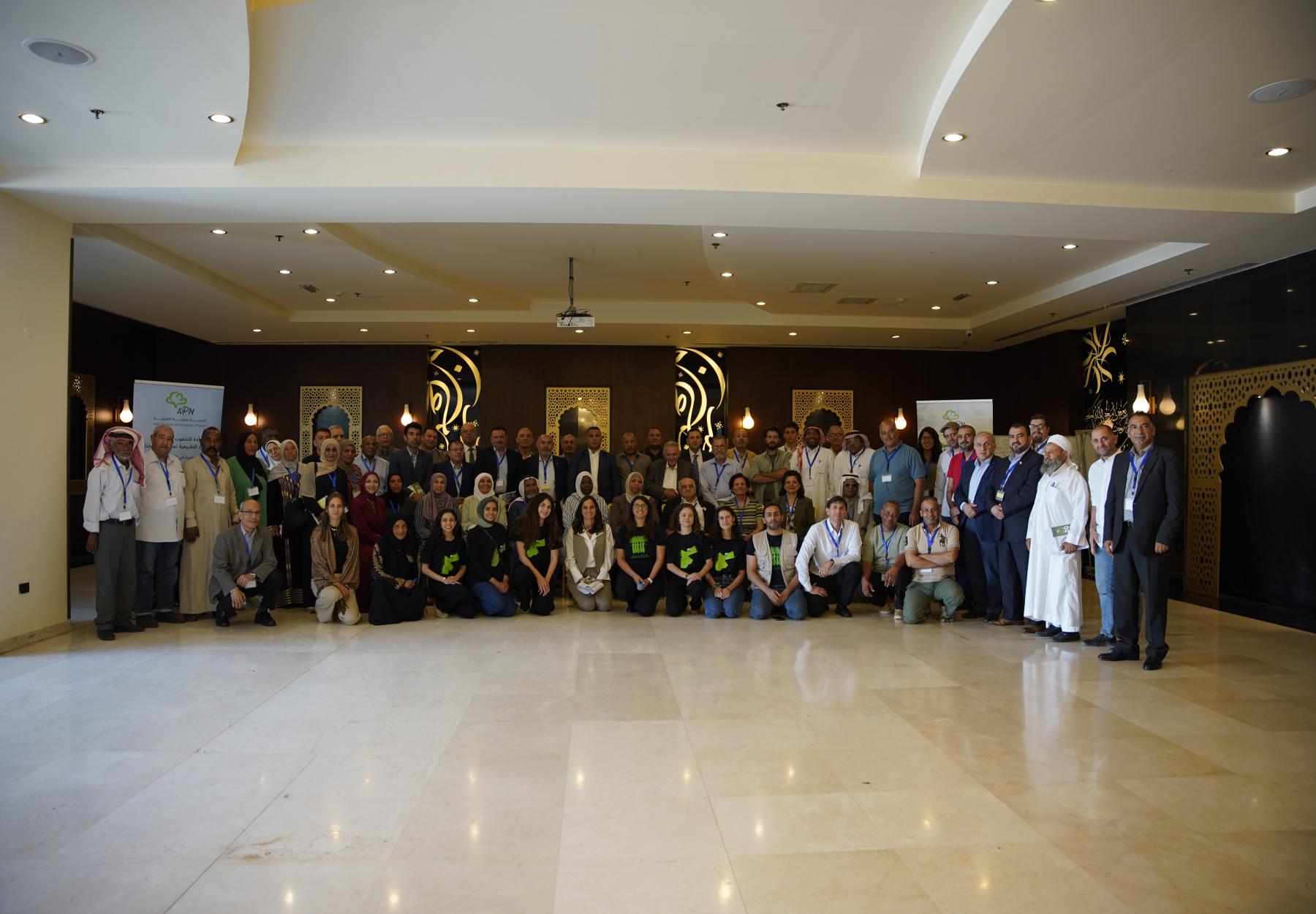
With the participation of over 100 representatives from government institutions, the private sector, agricultural associations, civil society organisations, farmers, agricultural workers, academics, researchers, experts, and media professionals, APN organised a national consultative session on food sovereignty and the development of Jordan’s agricultural sector. The session took place at the Landmark Hotel in Amman.
The event aimed to create a participatory space for knowledge exchange and practical solution-building, encouraging collaborative action around agricultural priorities and opportunities in Jordan.
In her opening remarks, APN Chairperson Razan Zuayter stressed that equitable and sustainable development can only be achieved through the inclusive participation of all sectors—governmental, civil, and academic—in setting priorities, shaping strategies, implementing plans, and ensuring accountability. She highlighted the importance of strengthening local food systems as a cornerstone of food sovereignty.
Assistant Secretary-General for Projects and Rural Development at the Ministry of Agriculture, Engineer Khaled Al-Hayseh, described the session as a valuable opportunity to exchange insights on how to boost agricultural productivity and develop value chains. He noted that it represents a step forward in building a shared roadmap that identifies key priorities and opportunities for the sector, leading to actionable initiatives that translate recommendations into tangible outcomes. This, he added, would support Jordan’s efforts in developing a modern, resilient agricultural sector capable of meeting future challenges and capitalising on potential opportunities.
He also affirmed the Ministry’s commitment to incorporating the session’s recommendations into its upcoming ten-year strategy, in line with Jordan’s Economic Modernization Vision, which has received royal endorsement and reflects the government's focus on supporting productive sectors and strengthening food security.
APN General Manager Mariam Al Jaajaa presented an overview of the broader context shaping Jordan’s agricultural sector, touching on its historical, economic, and policy dimensions. She also addressed the root causes of its current trajectory, the challenges it faces, and the opportunities to enhance its role in achieving food sovereignty and sustainable development.
During the open dialogue session, participants shared diverse perspectives on current challenges and future prospects. They discussed the need for enhanced and coordinated policies oriented to sustainable agriculture, improved access to resources, and greater support for smallholder farmers—who are seen as the backbone of Jordan’s food security.
Farmers highlighted the difficulties they face, particularly in financing, labor, marketing, and water scarcity. Farmer Ahmad Al-Hiwarat noted that access to financing remains the most pressing challenge, as investors, banks, and funding institutions often perceive the sector as high-risk. He stressed the need to establish agricultural cooperatives to improve farmers’ access to inputs, markets, and processing opportunities.
Aida Daeesat, a farmer from the Southern Jordan Valley, expressed her gratitude to APN for its ongoing support through the distribution of fruit trees, rehabilitation of agricultural ponds, installation of irrigation networks, and the training of women in drying fruits and vegetables—efforts that have contributed to economic empowerment and product marketing.
Participants were later divided into focused working groups that explored key themes including land, seeds, wheat, water, pesticides, fertilizers, financing, food processing, and marketing.
Full photos and statements available [here].


