APN | Rome
24 July 2025
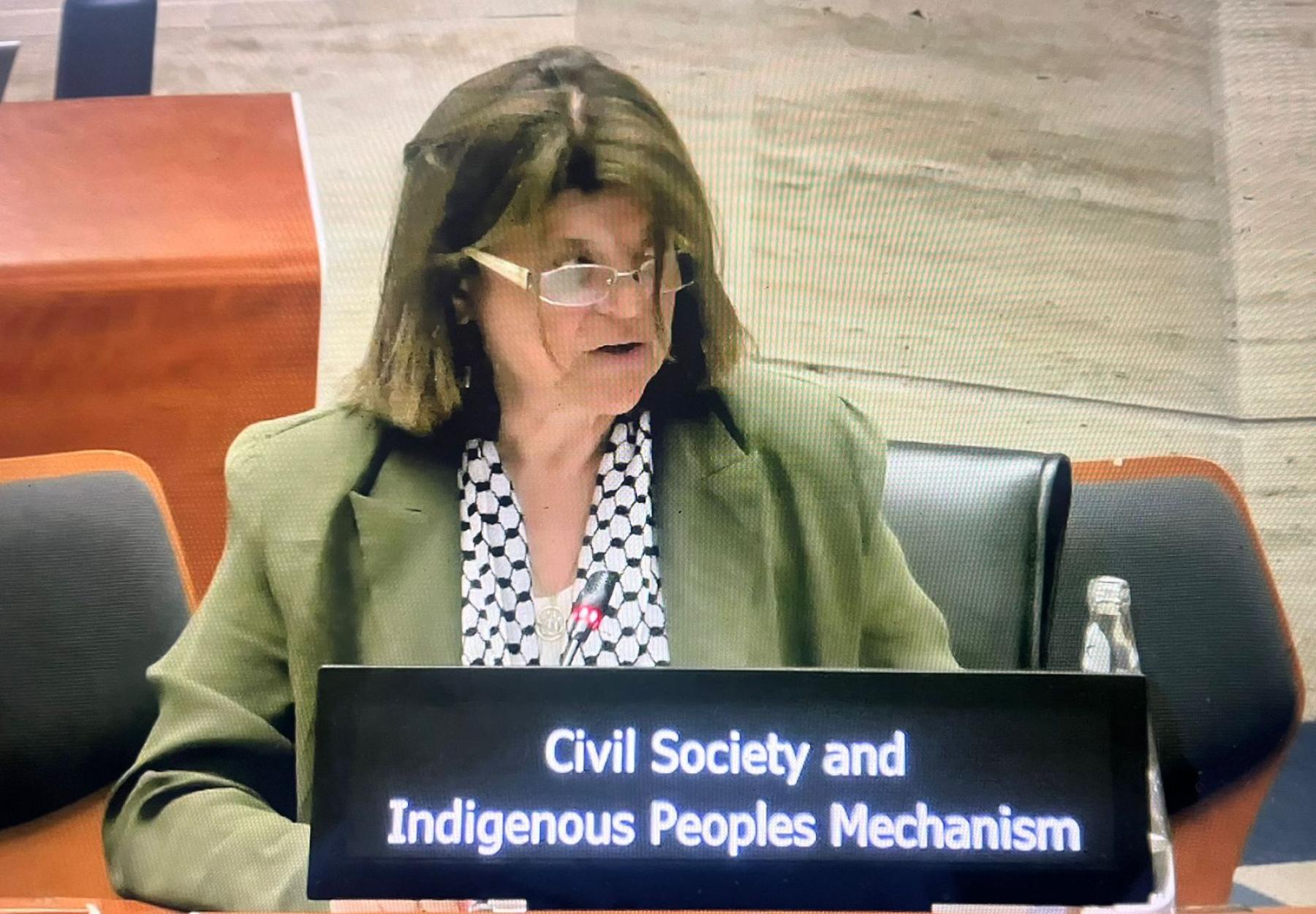
Razan Zuayter, APN Chairperson and founder of the Arab Network for Food Sovereignty (ANFS), issued a targeted and urgent appeal during the “Collaborative Governance Dialogue on Food Security and Nutrition in Protracted Crises”, held on 24 July 2025, at the World Food Programme headquarters in Rome. She opened with a piercing question:
“We gather here, haunted by death in Gaza and wonder, is it only them, or are we more dead in our humanity and integrity?”
Zuayter went on to pose a series of poignant questions aimed at the international leadership, challenging their credibility and proclaimed commitment to upholding peace and human rights.
“Is the extermination of over 900 Palestinians seeking the crumbs of survival at Gaza Humanitarian Foundation death traps consistent with your ambition to be a peacemaker?”
In a pointed critique of the European Union, she asked:
“Who and how many must be killed before reviewing trade agreements?”
She also held corporations accountable for their role in enabling genocide, condemning their pursuit of market competition that fuel and sustain the occupation’s genocidal crimes. To effectively combat these structural injustices, Zuayter called on civil society organisations to free themselves from of donor-imposed conditions.
Turning to the failures of UN agencies, Zuayter asked:
“To the World Food Programme: Why are you unable to get a single tomato seed into Gaza?”
“To the FAO (Food and Agriculture Organization): why did not you work on reviving the local food system since the beginning of the genocide?”
She further challenged the neglect of UN and key actors in the Committee on World Food Security (CFS) of policy guidelines that can viably guide the redressal of food insecurity in contexts of colonial and military occupation and conflict:
“Why did you paralyze the FFA which advances sovereign food systems grounded in lasting and just peace?”
Turning attention to the ongoing genocide that continues to be escalated and funded, Zuayter asserted that the current global system is unfit to address military occupation and settler colonialism.
She went on to expose what she called the complicity of the global system with settler and extractive colonialism and its criminal looting of land and natural resources in Palestine, Lebanon, Syria, Sudan, and the Congo. Critically, Zuayter warned against the transformation of aid into a tool of domination in response to these injustices, and urged recognition of ecocide as an international crime to ground accountability and rights-based redressal.
Zuayter further argued that the UN's ability to achieve justice remains limited not only by donor conditions but more precisely by donor instructions, which render international justice mechanisms subordinate to systems of hegemony. She criticised the recycling of orientalist narratives through media, education, and foreign policy, which lends colonialism a false moral legitimacy and allow states to shirk their transboundary obligations to prevent and stop ongoing crimes and violations.
Here, Zuayter called out the structural dysfunction of our international legal system that is showcased by the repeated use of veto powers in the UN Security Council, used to shield regimes that commit genocide, starvation, and forced displacement.
Yet Zuayter also grounded her speech in an activating and critical hope. She emphasised that power not only lies in high-level decision-making, but in how we speak, remember, resist, and act. She called for an immediate end to the genocide in Gaza, and for the reactivation of the CFS Framework for Action as a reference for realizing food sovereignty and building a just and lasting peace.
Zuayter also highlighted APN’s experience, sharing that the organization has supported thousands of Palestinian farmers and planted more than 3.1 million trees without foreign funding. During the most recent war on Gaza, it succeeded in empowering 600 farmers to produce 6 million kilograms of vegetables.
To conclude, she called on the CFS to be transformed into a platform for accountability, not merely for policy dialogue and coordination. She called for support of the International Court of Justice (ICJ), an end to trade practices that reinforce genocide, and accountability for complicit and enabling corporations. She affirmed that the struggle for food sovereignty is also a struggle to liberate knowledge production and policymaking from the grip of colonial domination.