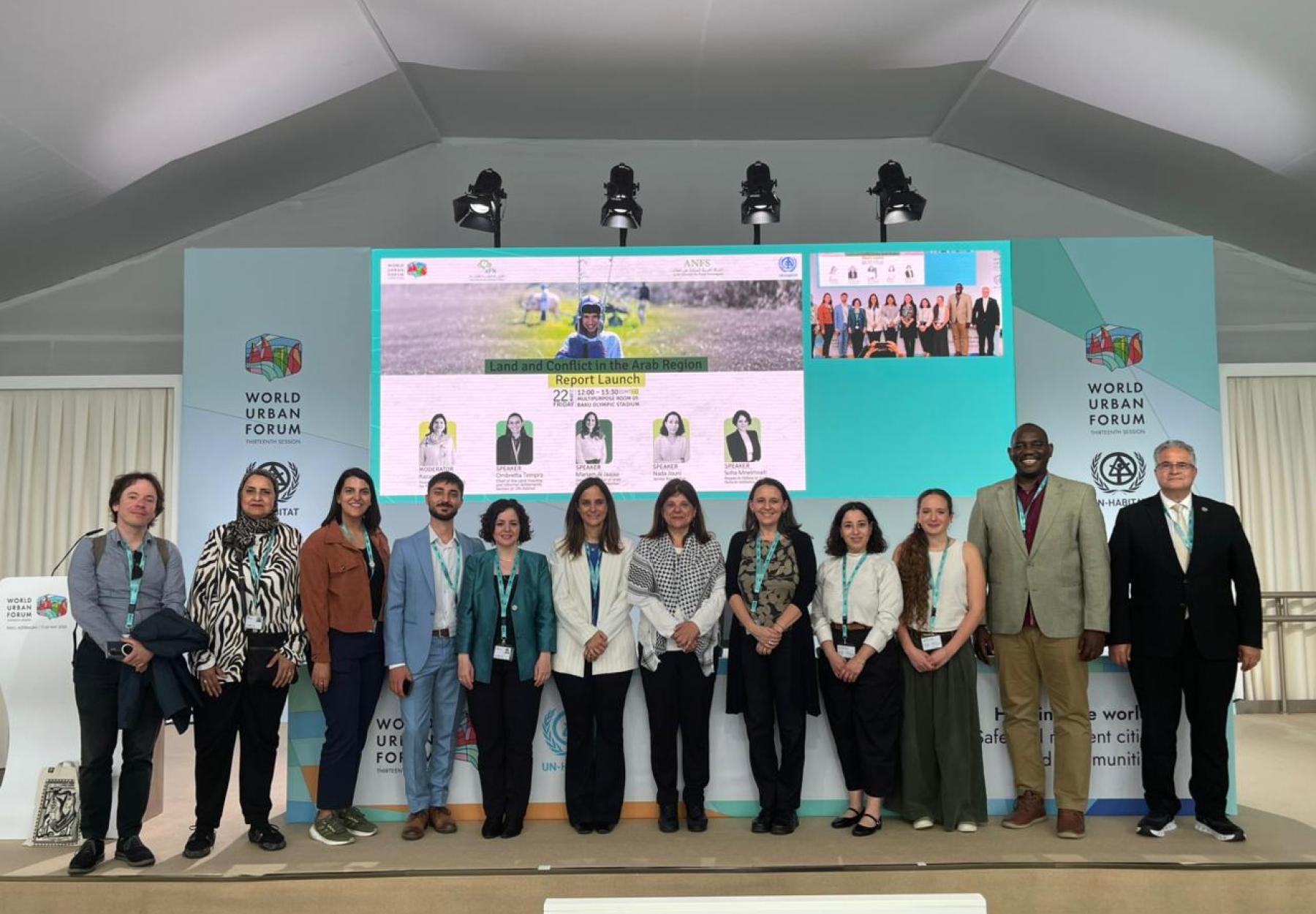
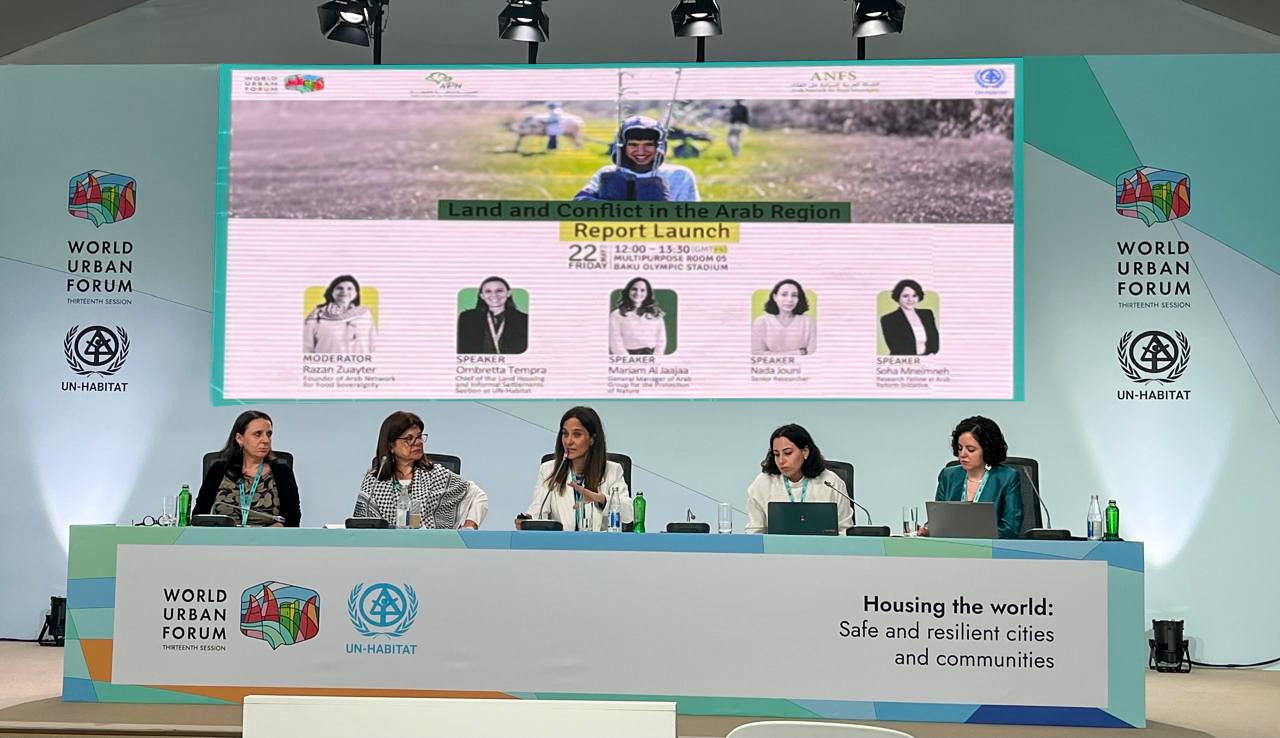
APN launched the report “Land and Conflict in the Arab Region”, which provides an in-depth regional analysis of the interlinked relationship between land issues and conflicts. It also presents recommendations grounded in rights-based approaches, justice, and sound land governance. The report was launched during the 13th session of the World Urban Forum held in Azerbaijan, which brought together nearly 20,000 participants, through a dedicated side event that convened experts, researchers, and representatives of international and regional organizations.
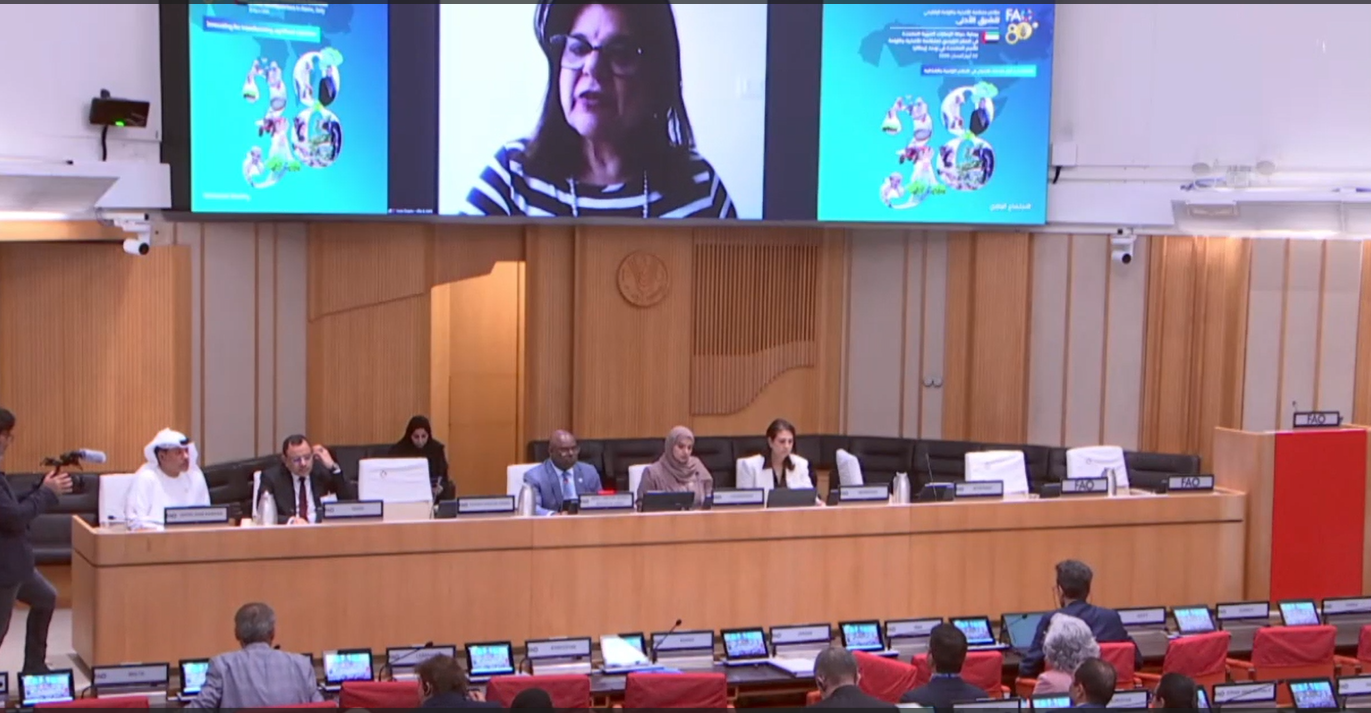
The interventions of APN’s Chairperson received significant international attention during her participation in the 38th session of the FAO Regional Conference for the Near East. During the ministerial meeting, she called for a fundamental rethinking of regional cooperation based on genuine agricultural integration and climate justice. She argued that food and water can no longer be viewed as merely technical or economic issues, but have become central to questions of sovereignty, peace, and political stability across the region.
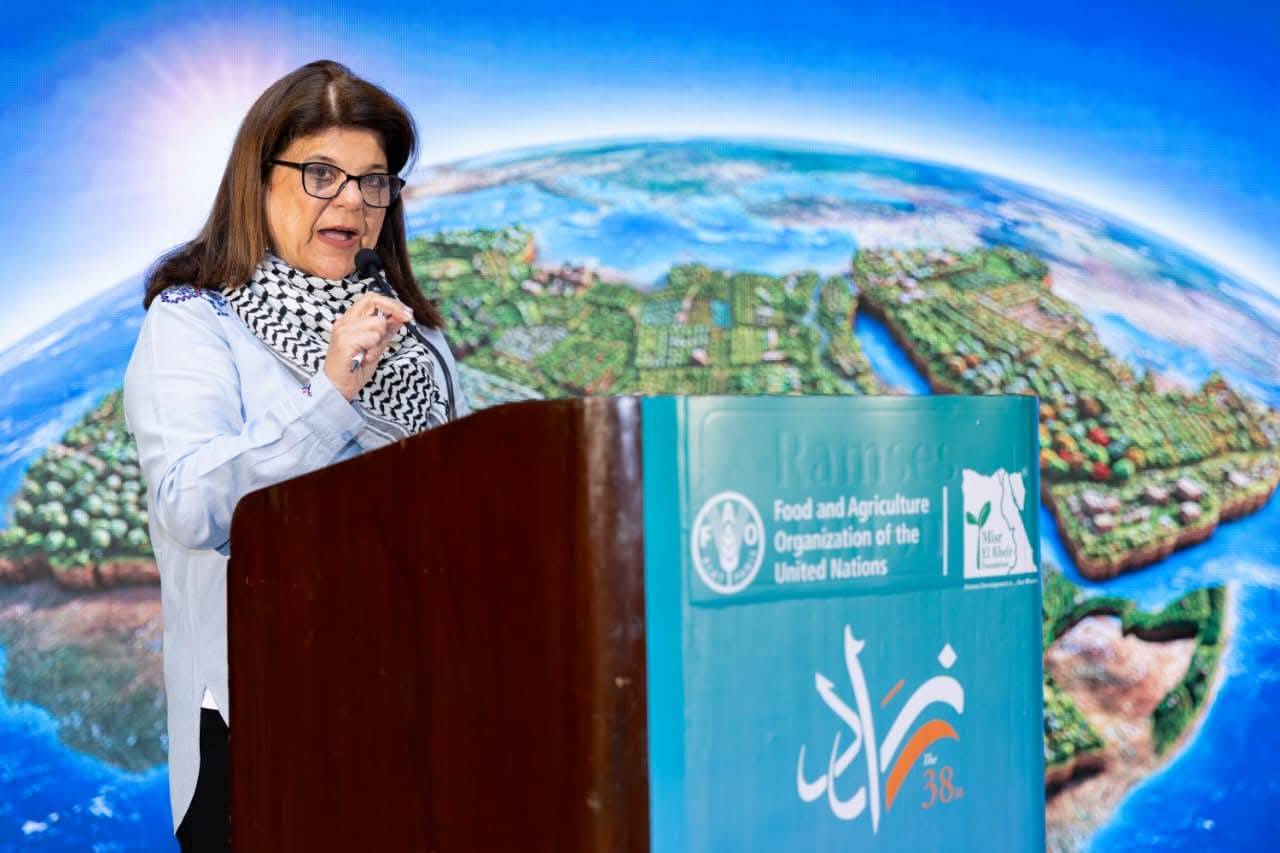
She also called for strengthening the role of civil society in building food sovereignty during the Civil Society Consultations for the Middle East and North Africa region.
During her intervention at the 14th Meeting of the Subcommittee for the Eradication of Hunger affiliated with the League of Arab States (LAS), she stressed that addressing hunger across the Arab region requires confronting the root causes of food insecurity, foremost among them armed conflict, political instability, and policies aimed at controlling natural resources. She emphasized that lasting solutions depend on regional cooperation, agricultural integration, and strengthening domestic food production.
At the invitation of the Food and Agriculture Organization (FAO), APN joined the Right to Food team’s project, “The Right to Food in Conflict Settings and Protracted Crises”, as part of an international process examining how to dismantle the structural imbalances governing food systems in conflict-affected regions.

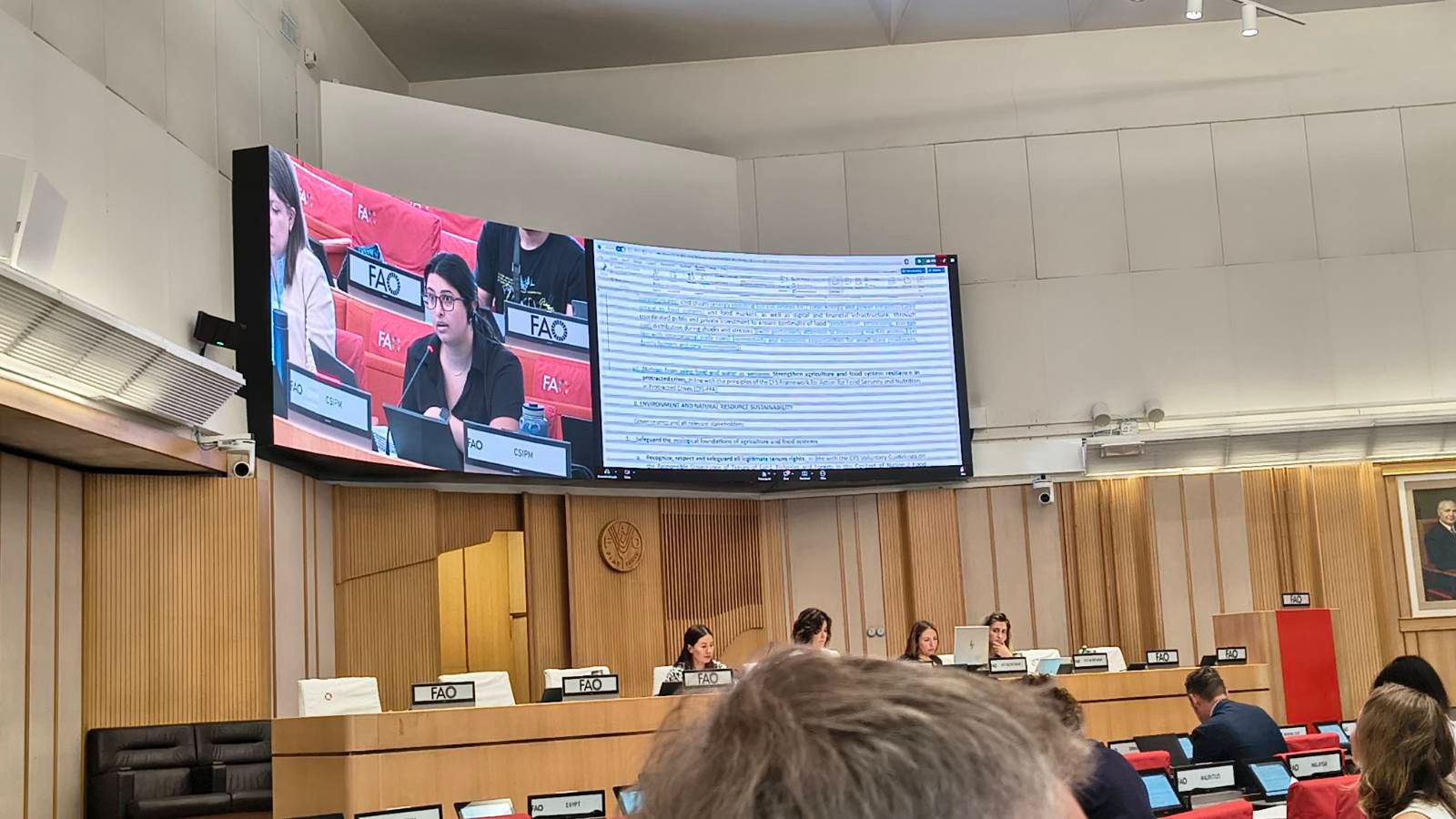
We also pushed for the inclusion of provisions prohibiting the weaponization of food and water during the first round of negotiations of the Committee on World Food Security in Rome.
We affirmed that the Palestinian Nakba is not a historical event that ended 78 years ago, but rather an ongoing settler-colonial project. She stressed that this project is manifested today in its most brutal forms through genocide, starvation, and the systematic destruction of Palestinian people, land, and natural resources. This was stated during our participation in the webinar “Resistance Until Return: 78th Nakba Day Commemoration", organized by the Philippines–Palestine Friendship Association.