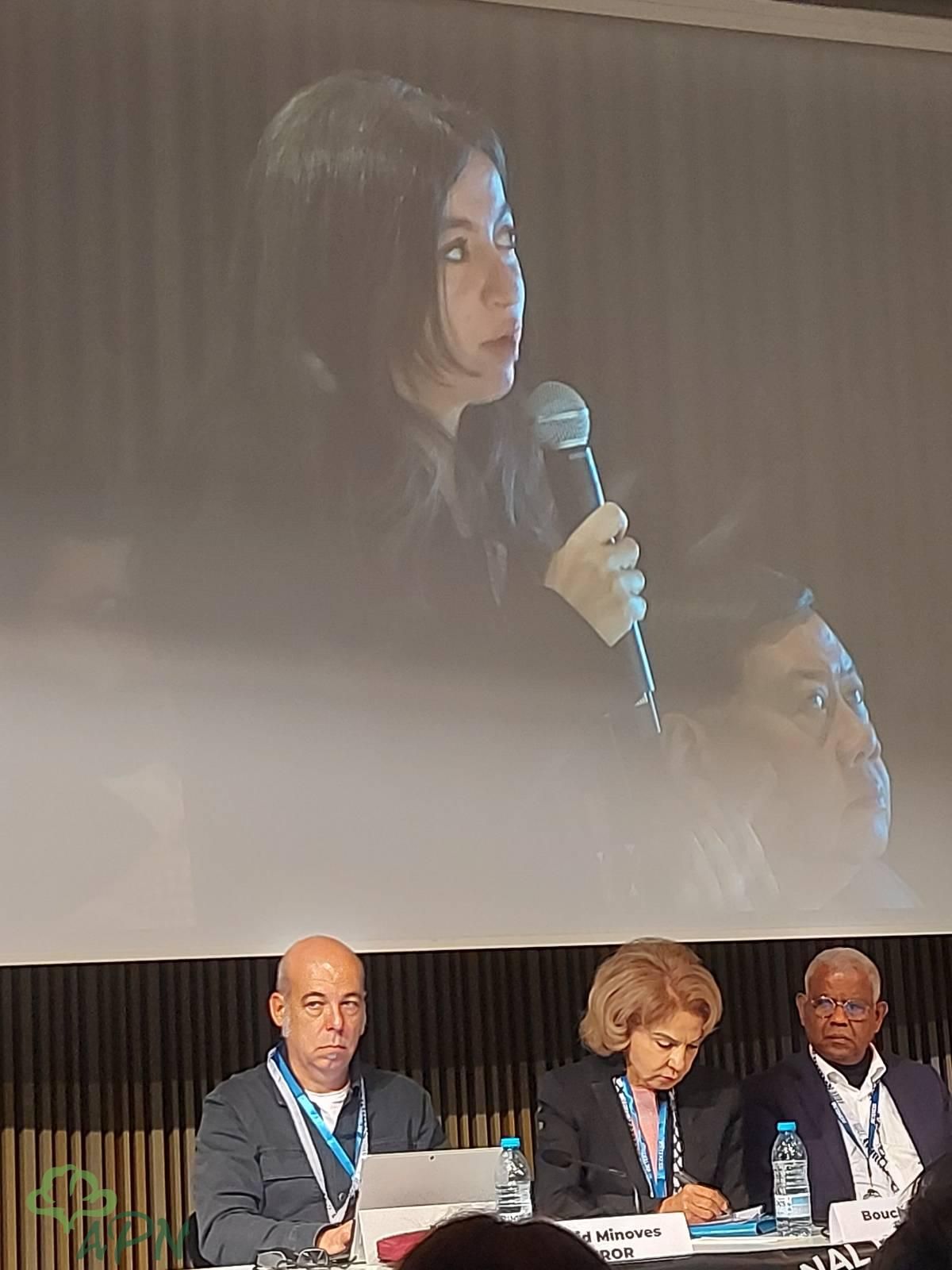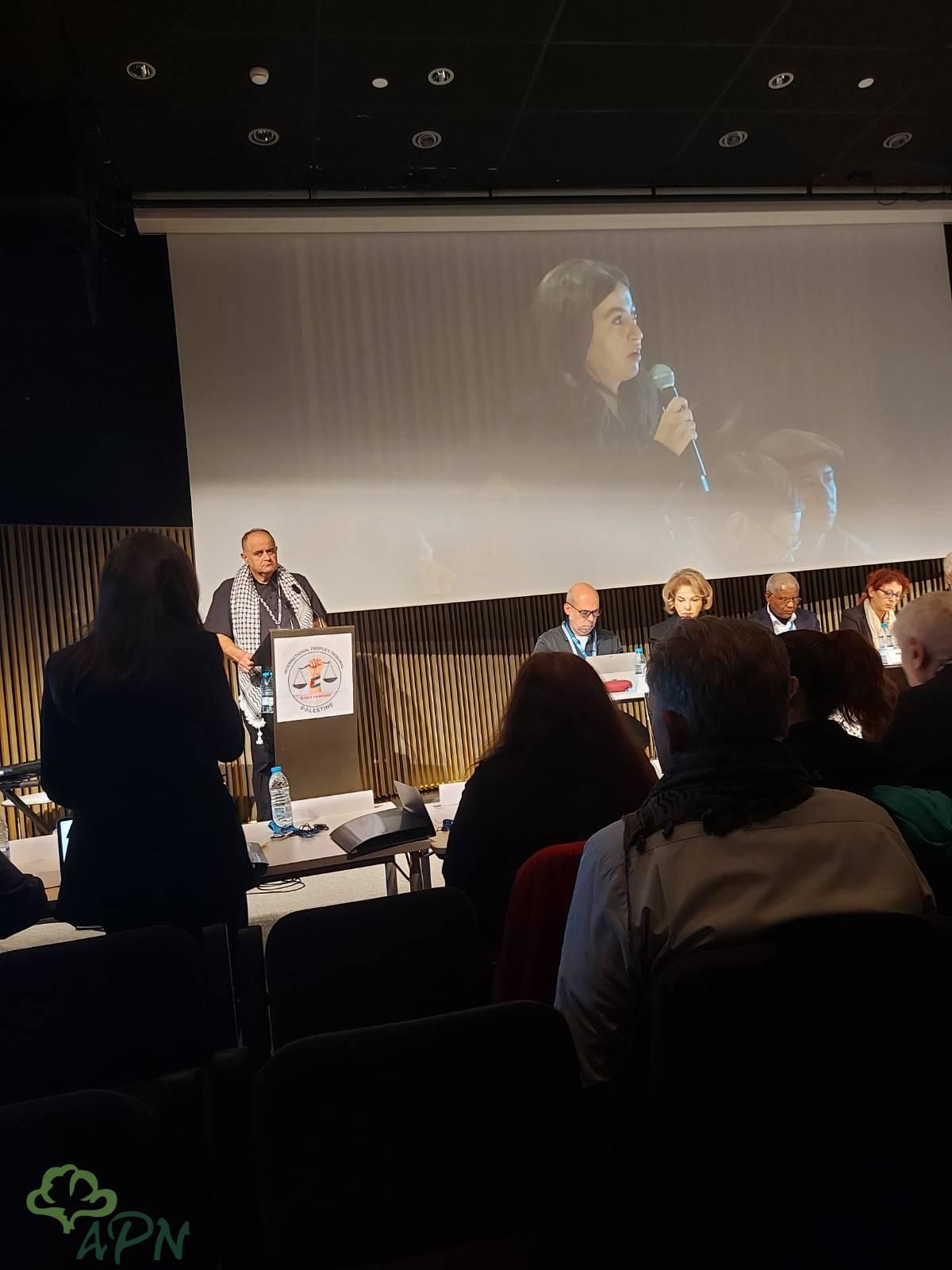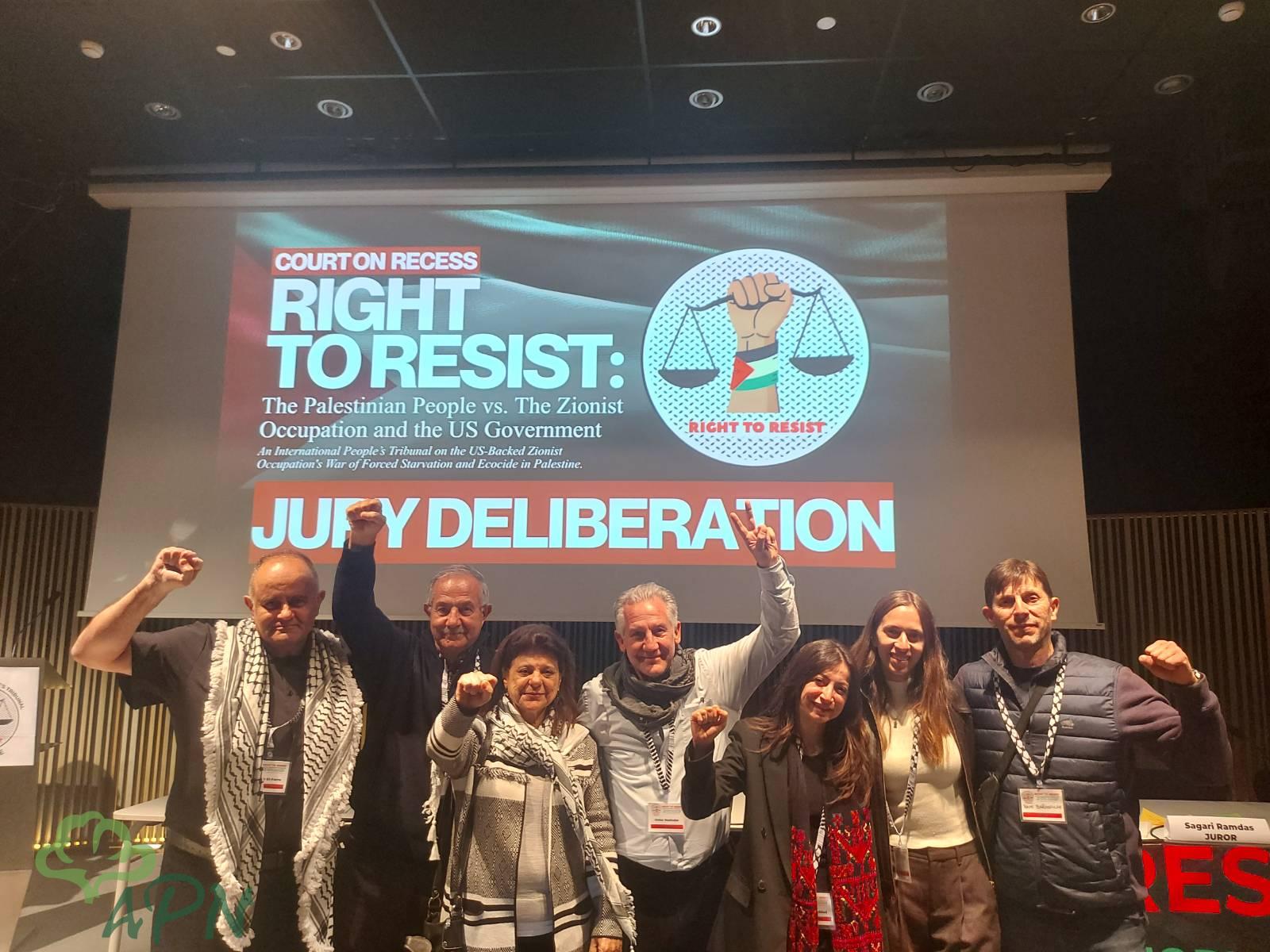
The organisers of the International People’s Tribunal on the War of Forced Starvation and Ecocide in Palestine announced the opening of the tribunal’s sessions, held on 22–23 November in Barcelona, Catalonia (Spain). The tribunal is a joint initiative of APN, the International League of Peoples’ Struggle (ILPS), the International Association of Democratic Lawyers, and the People’s Coalition for Food Sovereignty (PCFS), with support from the International Peoples’ Front (IPF).
The tribunal seeks to document and assess environmental violations, the weaponization of food, and related humanitarian abuses linked to the Israeli occuaption’s ongoing genocide in Palestine, drawing on testimonies from eyewitnesses and experts in international law, environmental science, and the humanitarian sector. It functions as an independent people’s mechanism for collecting, reviewing, and analyzing evidence in line with international legal standards on environmental protection and the right to food during armed conflict.
Based on witness testimonies and expert analysis, the tribunal is examining evidence of forced starvation and deliberate environmental destruction amounting to ecocide as methods of warfare. It is also assessing international and governmental roles that, according to the organizers, contribute to the continuation of these violations — including the governments of the United States, Germany, France, and the United Kingdom, as well as private actors identified in the case files.
The tribunal will evaluate the extent to which the documented practices violate international law, including international humanitarian law, international environmental law, the principles and guidelines on the protection of the environment during armed conflict, and other relevant legal instruments concerning international human rights.
Its findings aim to establish a public and systematic evidentiary record that can support future legal and advocacy efforts before bodies such as the UN General Assembly, the Human Rights Council, the International Court of Justice, the International Criminal Court, and national courts exercising universal jurisdiction.
The tribunal also serves as a platform for articulating responsibilities, as defined by the organising bodies, and advancing efforts toward accountability for violations against the environment and human rights in the Palestinian territories.
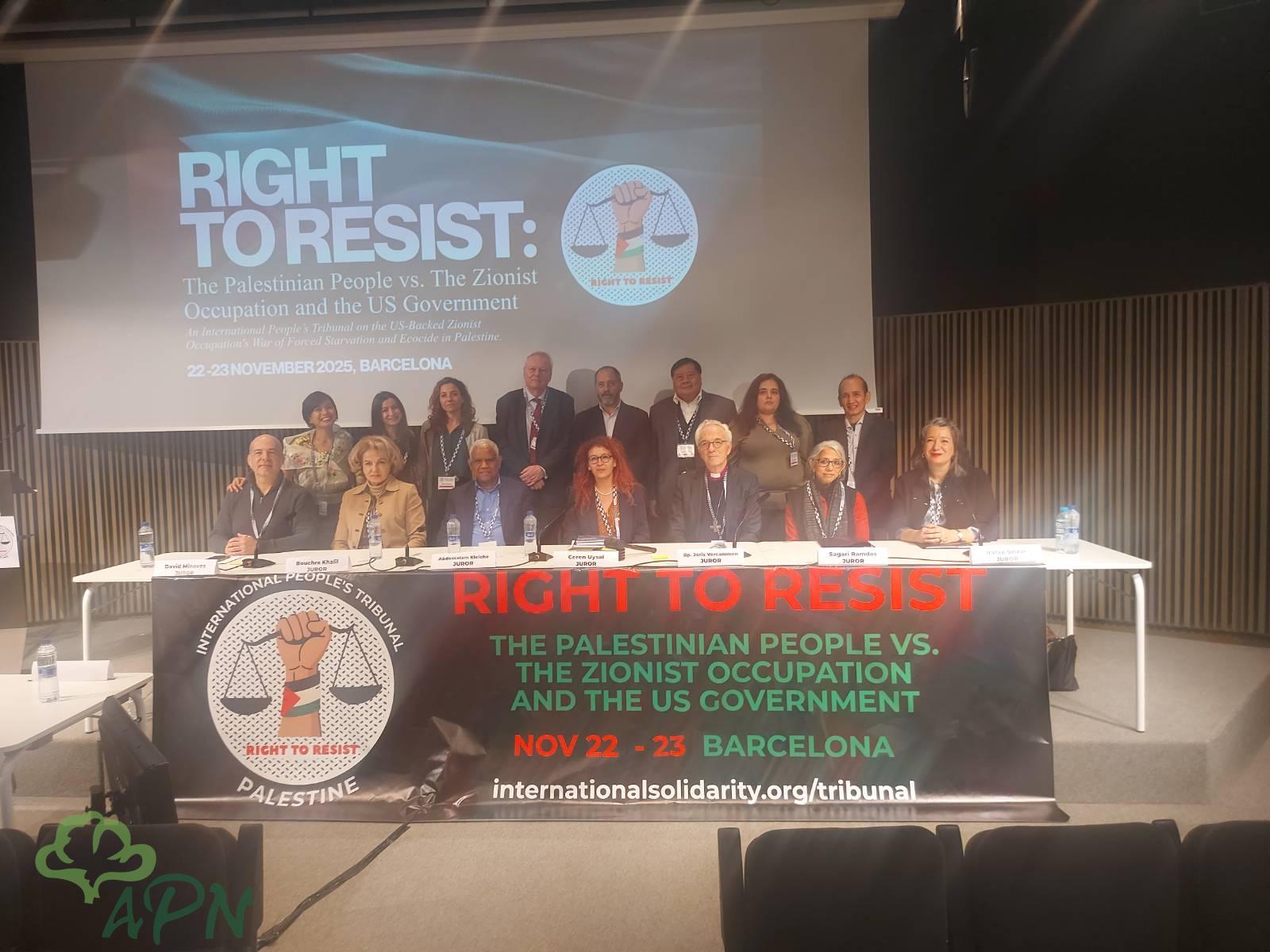
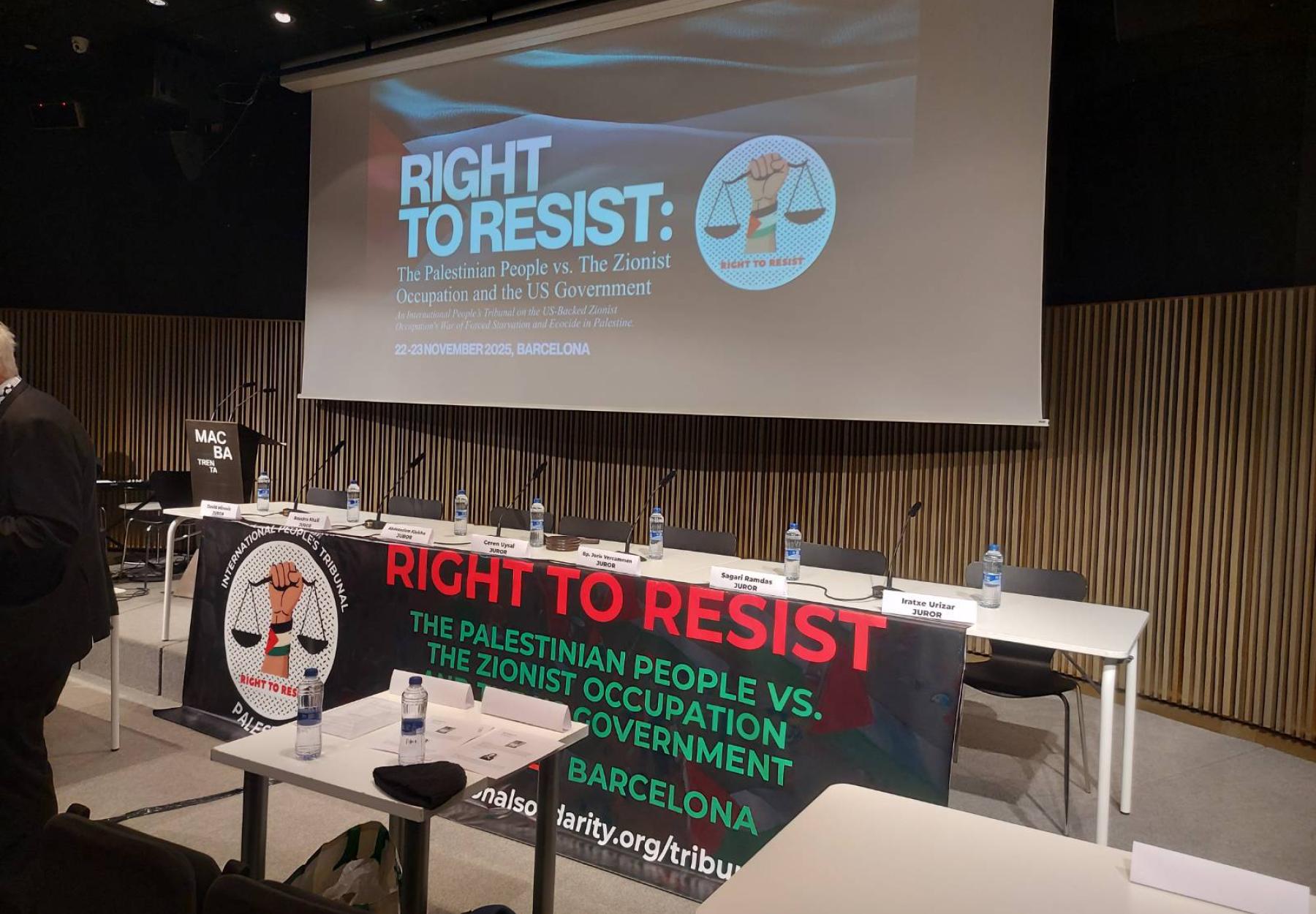
The jury panel included several prominent international figures, including Abdessalam Kleiche of the French Green Party; international lawyer Bushra Khalil; Turkish lawyer Serin Oysal; global political activist David Manouviz; human rights lawyer Irache Oriz; Joris Vercammen, former Archbishop of the Old Catholic Church of Utrecht; and veterinary scientist Sagari Ramdas.
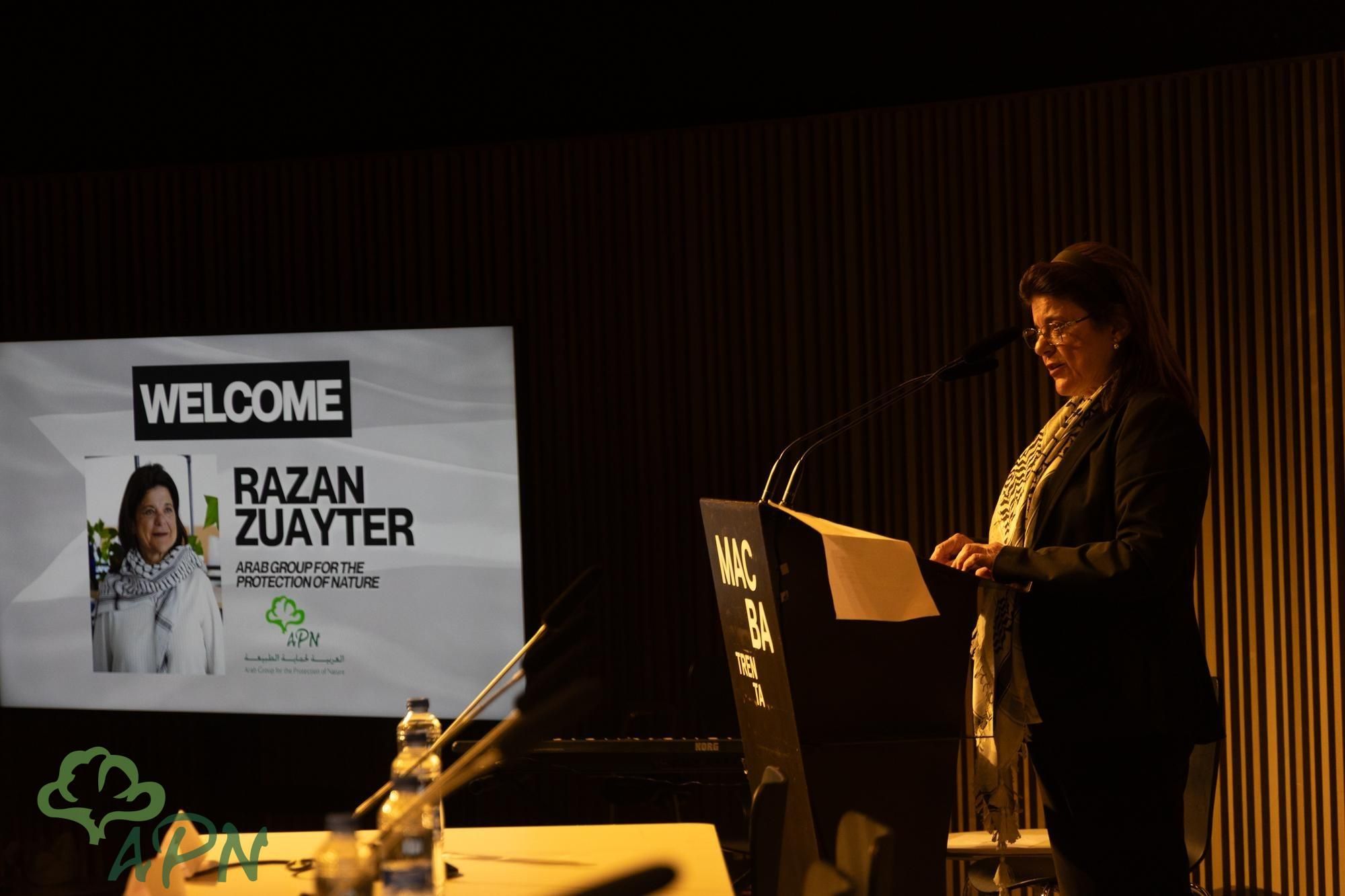
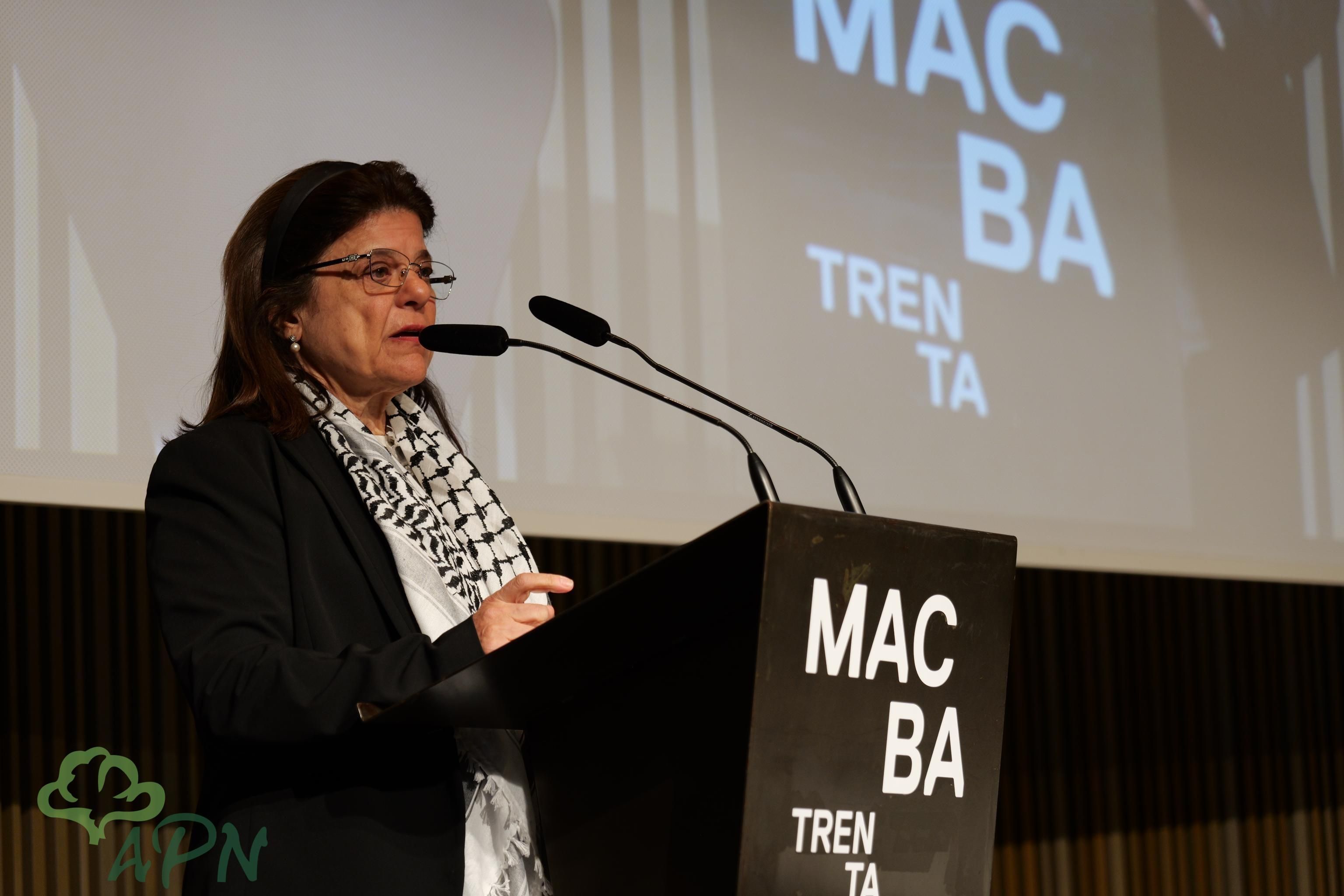
A delegation from APN participated in the sessions. APN Chairperson Razan Zuayter delivered the opening remarks, outlining the tribunal’s objectives, methodology, and evidentiary framework. She stated:
“What is happening in Palestine is not a series of isolated violations, but an integrated system of colonial violence, where food and the environment are used as weapons to subjugate the Palestinian people and crush the possibility of their survival. The deliberate destruction of land and water, the blocking of seeds, the razing of fields, and the transformation of nature itself into a tool of siege collectively constitute the features of ecocide and forced starvation aimed at killing in both the present and the future. In this context, the People’s Tribunal emerges as an act of intellectual and documentary resistance — a record that aims to prevent both the reformulation and erasure of these crimes, as well as reaffirming that people can hold oppressors accountable even when the international system fails to act, or rather, are designed not to act.”