APN | West Bank
30 December 2025
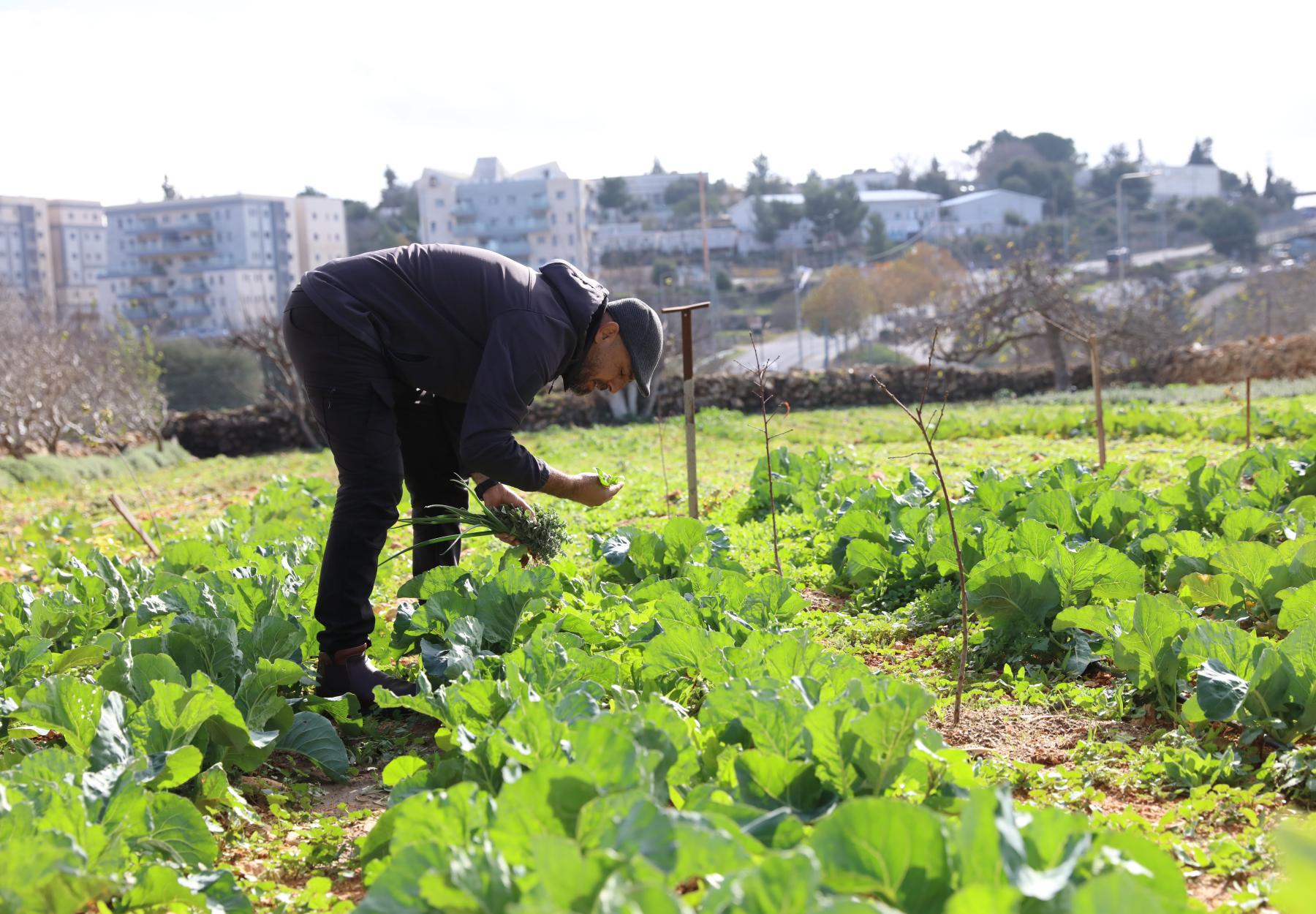
In response to accelerating settlement expansion and Israeli policies designed to isolate and empty Palestinian villages, APN, in partnership with local activists, launched Cultivating Sumod in the West Bank. The project aims to holistically strengthen local food systems in communities under urgent threat of siege, colonial violence, and displacement.
The first phase focused on a village encircled by 15 settlements and subjected to sustained settler and military violence, including repeated closures and severe movement restrictions. APN provided tailored agricultural support to 37 farmers and families, planting 3,441 fruit trees, including grapevines, citrus, and stone fruits, across 101 dunums. While chosen for their ecological suitability and economic returns, the trees also form a critical line of defense against land confiscation. Additionally, comprehensive home-garden kits were distributed in the village, including irrigation and fertilisation systems, water tanks, tools, organic inputs, seeds, and seedlings.
To further reinforce household food security, 45 families received poultry-rearing units with chickens, feed, and watering systems. Eleven water wells, including an ancient Roman well, were rehabilitated, restoring critical water access to the village against the occupation’s engineered scarcity.
Alongside material support, the project invested in strengthening the village’s agricultural knowledge base. Through a five-day, hands-on training program, families built practical skills in sustainable farming, soil and water management, composting, seed preservation, and the reuse of household organic waste, laying the foundation for long-term food sovereignty rooted in local knowledge and pride.
As the Village Council reflected:
“This project was not only essential material support; it carried deep moral value and a message of humanity, affirming a true commitment to empowering people.”
Following this success, the project expanded to two additional villages in Area C, under full Israeli administrative and military control, where residents face intense siege, repeated closures, and systematic isolation.
In the second village, APN established home gardens for 31 families supporting 181 people, installing household irrigation systems across 19 dunums, supplying seeds, seedlings, 883 bags of organic fertiliser, 1,500-liter water tanks, and gardening tools. Twenty-five dunums of farmland were fenced to protect against settler attacks, and a water spring was rehabilitated to serve 20 farmers. Poultry units were also provided, with preparations underway for technical training and the planting of 2,000 trees across 240 dunums.
TIn the third village, APN installed drip irrigation, fertigation systems, and water pumps for 65 families, covering 154 dunums of irrigated land. The intervention included the distribution of 1,154 bags of organic fertilizer, technical training to strengthen production sustainability, and preparations to construct agricultural ponds and plant 1,500 trees across 30 dunums.
Cultivating Sumod continues to expand its reach, fortifying local agricultural and water infrastructure across besieged villages to build robust, sovereign food systems and agricultural livelihoods as well as safeguard communities’ inalienable right to remain on their land.
As one steadfast farmer put it:
“If they offered us millions, we wouldn’t move a single centimeter. It’s enough for me, my wife, and my children to come here and smell a sprig of sage.”


